


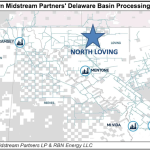
Monday (5/22) Western Midstream Partners, LP (WES) announced the sanctioning of a new 250 MMcf/d cryogenic processing plant in northern Loving County, TX, the North Loving Plant. The expected in-service date is the fourth quarter of 2024. The announcement brings Western's Permian basin processing capacity in development to 550 MMcf/d. The 300 MMcf/d Mentone III plant is scheduled to come online in the fourth quarter of this year. The North Loving plant will bring Western’s plant count to five in the Texas portion of the Delaware sub-basin. In addition to the Permian assets, WES also owns infrastructure in the Denver-Julesburg basin, the Marcellus shale in Pennsylvania and the Uinta basin in Utah.
Featured Articles


- Blog
Keep It Comin' Love – Permian Crude Leads Growth, But Will Gas Processing Capacity Keep Up?
When it comes to U.S. crude oil plays, no basin has been more resilient than the Permian post-2020, and by extension, no basin has played a bigger role in taming oil prices — and regional natural gas prices — in recent months. While crude production in most other oil-focused basins is flat-to-lower on average since 2020, Permian crude output has climbed 15% in that time, from about 4.5 MMb/d in 2020 to just over 5.1 MMb/d this year to date, with much of that growth occurring in the past year or so. You could say Permian crude saved the day — at least for a time. However, that growth could not have happened without a significant build-out of natural gas midstream infrastructure. And a lot more of it will be needed if Permian crude production is to continue growing and keep U.S. crude oil prices in check. In today’s RBN blog, we provide an update on gas processing capacity in the Permian.


- Blog
Keep It Comin’ Love, Part 2 - Permian Crude Leads Growth, But Will Gas Processing Capacity Keep Up?
Permian crude oil production has climbed ~30% since the lows of 2020 to about 5.2 MMb/d this summer and helped keep crude oil — and gasoline — prices in check as market balances tightened. With that has come a lot of gross gas, which surged by over 40% to 21.3 Bcf/d on average this summer, up from the 2020 low of just under 15 Bcf/d. If unconstrained by infrastructure, RBN expects that to grow another 30%, or more than 6 Bcf/d, in the next three years, but only if there is adequate midstream capacity — everything from gathering lines to processing plants and, ultimately, gas and liquids transportation lines to deliver the products to consuming markets on the Gulf Coast. While there’s been a significant midstream build-out over the past two years, and more expansions are in the works, there are major outstanding questions about whether it will get built in time and in the right places to prevent prolonged bottlenecks. In today’s RBN blog, we continue our series focusing this time on upcoming expansions and how total processing capacity stacks up against RBN’s Mid-Case production outlook over the next several years.


- Blog
Keep This Party Going - The Expansion of Permian Gas Infrastructure Is Far From Over
The build-out of natural gas processing plants in the Permian continues unabated. In just the past few days, four of the largest midstream players in the U.S.’s premier hydrocarbon production area have unveiled plans for a combined 1.3 Bcf/d of new processing capacity, most of it in the gassier Delaware Basin portion of the crude-oil-focused play. And that’s on top of the 11.7 Bcf/d of processing that’s already been added in the Permian over the past four-and-a-half years — and the 2.6 Bcf/d of soon-to-be-finished projects announced previously. That’s quite a run, and still more processing plants may be in the cards — if midstreamers build more takeaway-pipeline capacity. In today’s RBN blog, we discuss recent processing-plant and pipeline developments in West Texas and southeastern New Mexico.
