


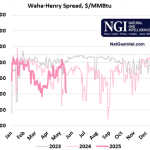
The Permian Highway Pipeline from West Texas to Katy underwent maintenance last month between April 22 and April 25, and Waha prices were relatively unscathed, not experiencing the extreme lows associated with previous maintenance events in the capacity-constrained Permian Basin. Last week was a very different story, however, as a maintenance event on Permian Highway coincided with a price plunge. The pipeline is performing a turbine exchange which has reduced capacity on the pipeline by about 0.5 Bcf/d. The partial outage began on May 13 and will run through May 26.
Featured Articles
- Analyst Insight
Waha Natural Gas Cash Passes the Other $2 Mark
While natural gas prices have been low across the nation this year, prices in the Permian basin are plunging to new depths. Over the past week, it cost more to get rid of gas in the Permian than to acquire it at Henry Hub on the spot market.
- Analyst Insight
Joy and Misery as Waha Gas Price Plunges to Multi-Year Lows
Last week saw an Ode to Joy from some and a lament of misery from others as Waha cash gas prices reached multi-year lows.


- Blog
It's Always Somethin' - Negative Prices for Crude and Natural Gas Slam Permian Markets
Underlying Monday’s financially driven oil price rout are physical markets that are in extreme turmoil as they contend with severely reduced demand resulting from the COVID lockdowns and rapidly filling storage tanks. In the Permian Basin, the epicenter of U.S. shale oil, the crude benchmark price — WTI at Midland — on Monday crashed to a historical low of negative $13.13/bbl before rebounding to a positive $13.01/bbl Tuesday. The same day, prices at the Permian natural gas benchmark Waha revisited negative territory for the third time this month, with a settle of minus $4.74/MMBtu for Tuesday’s gas day. Negative supply prices aren’t new to Permian producers, at least for gas — Waha settled as low as minus-$5.75/MMBtu in early April 2019. But up until a couple months ago, oil prices were supportive enough to keep producers drilling regardless. Now, that’s all over, at least for a while. What can we expect now that negative oil prices have arrived in the Permian? Today, we’ll dissect the latest bizarre pricing event to rattle the Permian natural gas and oil markets.
