


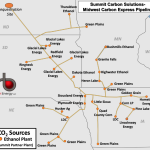
Summit Carbon Solutions just hit another speed bump on the road to building what it hopes will be the world’s largest carbon dioxide pipeline. For the second time, South Dakota regulators shot down the company’s permit application to lay 700 miles of pipe through the state — a critical link in Summit’s proposed Midwest Carbon Express pipeline. A 2,500-mile network to capture CO₂ from as many as 57 ethanol plants across five Midwestern states. The latest denial follows a March decision by South Dakota to ban the use of eminent domain for CO₂ pipelines — a big blow to Summit’s strategy, which leans heavily on compulsory land access to stitch its route together.
Featured Articles


- Blog
End Game - Targeted Approach Could be Key to Success for Carbon-Capture Pipeline Projects
It’s been a tough couple of months for developers of large-scale, multi-state carbon capture and sequestration (CCS) projects, which have been stung by widespread public opposition and often hamstrung by state and local regulations. But while those factors helped lead one developer to pull the plug on its project and another to push back its schedule by a couple of years, that’s not to say there isn’t a path forward for some projects. In today’s RBN blog, we examine why Wolf Carbon Solutions’ targeted approach and a pipeline conversion by Tallgrass Energy could be the most likely CCS projects to reach operational status.
- Analyst Insight
CO2 Pipeline Project Receives Iowa Approval
Summit Carbon Solutions receives approval for pipeline in Iowa.


- Blog
Rock and a Hard Place - Fierce Opposition, Lack of Regulatory Framework Squeeze CO2 Pipeline Projects
When Navigator CO2 Ventures decided to pull the plug on its long-planned Heartland Greenway project, a vast network that would have captured carbon dioxide (CO2) emissions from dozens of ethanol producers in the Midwest and Great Plains then piped them hundreds of miles for permanent sequestration, it was a significant setback for the Biden administration’s climate goals. More than that, it showed how large-scale carbon-capture projects face opposition from seemingly all sides and how the lack of a meaningful regulatory framework at the federal level only adds to the industry’s challenges. In today’s RBN blog, we look at the Heartland Greenway cancellation, what it says about the future of similar projects, and what regulatory changes might be needed at the federal level to make large-scale carbon capture and sequestration (CCS) a reality.
