


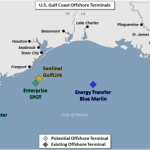
Over five years after its original application to the United States Maritime Administration (MARAD), Sentinel Midstream’s Texas GulfLink (TGL) deepwater export project received its Final Environmental Impact Statement (FEIS). This critical milestone means that TGL has successfully navigated the National Environmental Policy Act (NEPA) process, the most time-intensive part of the regulatory journey. The next major step is obtaining the Record of Decision (ROD) from MARAD.
Featured Articles
- Analyst Insight
Sentinel Midstream’s Texas GulfLink Navigating Deepwater Crude Export Regulatory Process
Texas Gulflink deepwater crude export project clears some regulatory hurdles in September


- Blog
Dark Horse - Sentinel Midstream's Texas GulfLink Emerges as Serious Contender in Export Terminal Race
In the race to build the next deepwater crude oil export terminal in the Gulf of Mexico, Sentinel Midstream’s proposed Texas GulfLink (TGL) is currently in second place in the regulatory race, behind only Enterprise’s Sea Port Oil Terminal (SPOT) — and seems to be emerging as a serious contender. The plan offers some compelling attributes, including Sentinel’s status as an independent midstream player and plenty of pipeline access to crude oil volumes in the Permian and elsewhere. In today’s RBN blog, we turn our attention to TGL and what it brings to the table.


- Blog
Going The Distance - Sentinel's Texas GulfLink Makes Big Strides Forward in Export Terminal Race
In the race to build the next deepwater crude oil export terminal in the Gulf of Mexico, Sentinel Midstream’s proposed Texas GulfLink (TGL) has become one of the frontrunners. TGL’s plan gained its crucial Record of Decision (ROD) Approval from the U.S. Department of Transportation’s Maritime Administration (MARAD) on February 14, but there is still some distance to go before a final investment decision (FID) is reached. In today’s RBN blog we’ll discuss Sentinel’s TGL plan, why it might be uniquely positioned to move forward, and the other contenders still in play.
