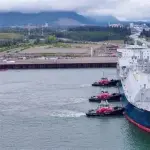
Shell’s strong second-quarter 2026 results were helped by an increasingly diversified LNG portfolio, but management’s comments suggest the bigger story may be what comes next in Canada. LNG Canada Phase 1 reached full capacity during Q2 2026, only about a year after shipping its first cargo, and has already loaded more than 100 cargoes. That performance helped Shell offset some of the LNG volumes lost from Qatar during the quarter. The next test is whether Shell and its partners sanction LNG Canada Phase 2.
Management said the joint venture is targeting a final investment decision (FID) before the end of 2026, subject to required approvals. If sanctioned, Shell sees Phase 2 as another layer of free-cash-flow growth beginning in the 2030s, on top of its existing $25-$30 billion/year base of free cash flow and the roughly $1.5 billion/year contribution expected from the ARC Resources acquisition. Shell said its existing Groundbirch acreage already underwrote Phase 1 and provided some gas for a potential second phase. ARC would give Shell enough additional gas to underpin Phase 2 if the partners move forward, although management emphasized that Phase 2 was not included in the base economics used to justify the ARC acquisition. In other words, Shell views the expansion as upside rather than something required to make the acquisition work.
The challenge is timing. Shell expects roughly 180 million metric tons/year of new LNG supply to enter the global market by 2030, potentially creating a more competitive market just as the company considers another large Canadian LNG investment. At the same time, Shell remains bullish on the longer-term demand picture, forecasting LNG demand growth of about 65% through 2050, with Southeast Asia, Europe, transportation and gas-fired power among the important demand drivers.