Chord Energy is spending more to coax additional oil from the wells it already has, though the production payoff remains relatively modest so far. During its Q2 2026 earnings call, the company highlighted a growing slate of projects aimed at improving production from its large Bakken base, including accelerated workovers, chemical treatments, shorter downtime, surface debottlenecking and AI-driven artificial-lift optimization. Those efforts have contributed to 2026 volumes coming in above Chord’s original expectations, but the increase is limited: full-year oil production is now forecast at 161 Mb/d, just 2 Mb/d above its initial outlook. Chord has also broadened its chemical-treatment program after encouraging early tests, expanding treatments across a larger population of wells even as the company continues to evaluate their effectiveness, durability and economic returns.
The bigger question is whether the additional spending can generate meaningful and repeatable returns. Chord is testing several types of chemical treatments and selecting wells based on their individual circumstances, and management said a few treatments have produced “pretty significant improvement” in well productivity. However, the company is still working on establishing why those treatments worked, whether similar results can be replicated across a larger population of wells, and how long the production response will last. Reflecting that uncertainty, Chord is assuming only limited volume upside from the expanded program for now.

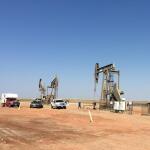
Image: Oil well pad in the Bakken Formation in North Dakota.
Source: USGS
The additional activity, however, is already showing up in costs. Chord raised its full-year lease operating expense (LOE) guidance to $10.30/boe, reflecting the production-enhancement initiatives as well as higher workover and non-operated expenses. That leaves the company spending more on its existing production base before it has demonstrated a commensurate, sustained improvement in volumes. Management argues that the added spending is justified when relatively small increases in LOE have a high probability of generating attractive risk-adjusted cash flow, but the broader economics of some of these initiatives remain to be proven.
Chord is pairing that well-by-well experimentation with technology that could potentially be applied much more broadly. AI has already been deployed across much of its rod-pump fleet to optimize pump loading, reduce wear and improve production, and the company is now using computers to help schedule its workover rigs across a basin position containing more than 5,000 wells. The system can weigh lost production, job costs, parts availability and proximity when determining where a rig should go next.
Together, the initiatives represent an increasingly intensive effort to extract more value from Chord’s mature Bakken inventory. For now, however, the clearest measurable effects are higher operating costs and a relatively small increase in expected oil production. The key test will be whether the chemical treatments, workovers and technology-driven optimization can produce sufficiently large and durable gains to justify the additional spending, rather than simply raising the cost of maintaining and incrementally improving the existing production base.