


Overseas shipping costs for propane and butane (LPG) remain extraordinarily high. The conflict with Iran has disrupted LPG exports through the Strait of Hormuz, forcing changes in how cargoes move and tying up vessels for far longer. The result is a worldwide shortage of available LPG shipping capacity — and a major added cost for U.S. exporters.
The spot rate for a Very Large Gas Carrier (VLGC) from Houston to Chiba, Japan reached $323/metric ton (62.00 cents/gallon) in early November. By November 19, it was still $311/ton (60 cents/gallon), compared with $303/ton (58 cents/gallon) on October 30. As the graphs below show, freight costs have climbed sharply from levels prevailing earlier.
For perspective, Mont Belvieu Non-TET propane was priced at 99.2 cents/gallon on Friday. The nearly 60-cent/gallon ocean freight charge alone amounts to about 60% of that price, before terminal fees and other export costs.
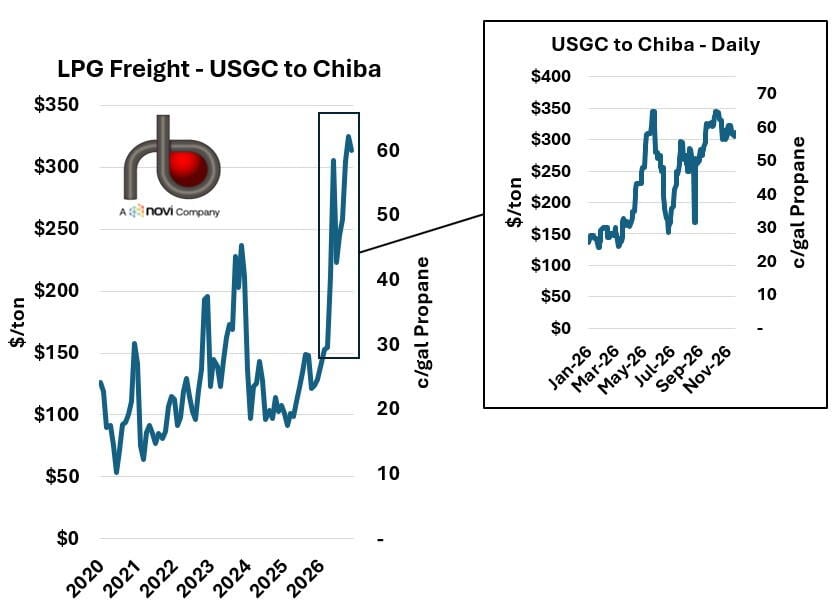
VLGC freight rate, Houston to Chiba, Japan: historical monthly averages (left) and 2026 daily rates (right). Left axes: $/metric ton; right axes: cents/gallon of propane. Source: OPIS.
Two factors are primarily responsible for the surge. Some Middle Eastern LPG now moves on short shuttle voyages through Hormuz, then is transferred ship-to-ship outside the strait for onward delivery. That adds handling, delays and the need for additional vessels. In addition, Asian buyers replacing lost Middle Eastern barrels with U.S. cargoes require much longer round trips, keeping VLGCs occupied and reducing effective fleet capacity.
Panama Canal delays and occasional voyages around the Cape of Good Hope further tighten vessel availability. Elevated freight supports competition for U.S. cargoes but squeezes export economics.