


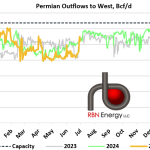
Outflows of natural gas from the Permian were down 0.13 Bcf/d week-on-week, with higher outflows to the West partially offset by lower outflows to the East. Outflows to the West averaged 2.41 Bcf/d, up 0.28 Bcf/d week-on-week, with higher outflows on El Paso towards the California markets. These flows are now back in line with levels seen during the previous two summers, after trending lower throughout the spring. However, ongoing maintenance and repairs on the El Paso Pipeline will continue to intermittently impact Westbound capacity.
Featured Articles
- Analyst Insight
Waha Gas Price Plunges As Outflows to the West Were Disrupted
Waha natural gas prices have stayed out of negative territory thus far in 2025, but maintenance on El Paso is bringing the market closer to the low prices of much of 2024.
- Analyst Insight
Permian Natural Gas Outflows Retreat but are Poised to Hit New Highs in Coming Months
Outflows of natural gas from the Permian Basin were down last week relative to the previous week. However, we expect outflows to trend upward in the coming months.


- Blog
King of Pain - Waha Price Collapse Signals Worsening Gas Supply Glut in the Permian
The U.S. natural gas market last week was again reminded of the hair-trigger conditions that Permian producers and marketers are operating under — with gas production pushing against available takeaway capacity, all it takes is an otherwise minor/routine maintenance event on even one West Texas takeaway pipeline to send regional gas prices spiraling into negative territory. Waha Hub gas prices last week collapsed to their lowest level ever, with intraday trades even going negative — meaning some had to pay the market to take their gas. This wasn’t the first time that’s happened in the Permian — a similar event occurred in late November 2018 — but it was the worst to date and signals a heightened supply glut in the region, at least until the first new takeaway pipeline comes online in the fourth quarter of this year. Today, we explain the recent price weakness in West Texas and implications for Permian basis in 2019.
