


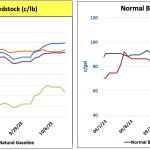
U.S. steam cracker margins for normal butane (butane) have rallied in early October overtaking ethane for the top spot as the most economical feedstock. As shown on the left-hand chart below, ethylene margins for butane cracking have increased from ~2 c/lb in early September to nearly 15 c/lb as of October 9th. Meanwhile, ethane steam cracker margins have improved by only about 5 c/lb over the same period, lagging the 13 c/lb increase for butane feed. Margins for butane cracking are currently 3 c/lb above ethane and 4 c/lb better than propane. So, what has been driving the big improvement in butane margins over the last month? As shown on the right-hand chart below, it has been weaker normal butane prices and stronger propylene prices. Normal butane (non-TET) prices have dropped by roughly 12 c/gal since early September settling at 78 c/gal on October 9, while polymer grade propylene (PGP) prices have jumped up by 7-8 c/lb to around 40 c/lb currently.
Featured Articles
U.S. LPG Steam Cracker Feedstock Margins Plunge
Normal Butane Steam Cracker Margins Soar


Ethylene Ethylene, Prettiest Margin I Ever Seen - Ethylene Margins Skyrocket; How Long Will It Last?
How about some good news to start the year? Over the past few weeks, ethylene margins have blasted into the stratosphere. These are good times for steam crackers, those petrochemical plants that use mostly NGL feedstocks to produce ethylene and other building-block chemicals. As you might expect, this newfound prosperity has a lot to do with ethylene’s price. In December alone, the price of ethylene was up 50%; versus April it’s up a whopping 4X, coming in yesterday at 37.5 cents per pound (c/lb). There are a whole range of factors responsible, including petchem outages due to the hurricanes, new downstream derivative units coming online, robust exports from the Enterprise Morgan’s Point dock, and, oh yes, strong demand for downstream products — everything from food packaging to construction materials. Is the spike in ethylene prices going to last? And what does it mean for NGLs, which account for more than 95% of the feedstock supply for U.S. ethylene. We’ll explore those questions and more in this blog series we begin today.
