


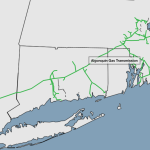
Much political and industry intrigue this year has surrounded the potential comeback of the Constitution Pipeline, which would bring gas from Pennsylvania to New York and New England. While the fate of that project is yet to be decided, Enbridge reached Final Investment Decision (FID) last week on a plan to bump up capacity on its existing Algonquin Pipeline by 75 MMcf/d. The project is known as the Algonquin Reliable Affordable Resilient Enhancement project (abbreviated AGT Enhancement, dropping the multiple adjectives).
Featured Articles


- Blog
Hello, Goodbye - New England Hopes New Life for Everett LNG Will Help Ease Reliability Concerns, Despite Mystic's Closure
The 1,413-MW Mystic Generating Station, a longtime workhorse for New England, shut its doors for good May 31. Located in Charlestown, MA, on the north side of Boston, Mystic is adjacent to the Everett LNG terminal, which supplied 100% of Mystic’s natural gas for several decades. The power plant’s closure meant the Everett terminal might also be history. However, the Massachusetts Department of Public Utilities (DPU) recently approved new contracts that will keep Everett LNG open for at least six more years. In today’s RBN blog, we’ll discuss the combined impact of Mystic’s demise and Everett’s stay of execution, how the region has handled this summer’s heat wave, and what could be in store for next winter.


- Blog
Just One More - How New England Would Benefit From a Gas Pipeline Expansion
New England is hell-bent on decarbonizing quickly, and it’s been making some progress. But like it or not, the region still depends heavily on natural gas for both power generation and space heating, and gas supplies are stretched to the limit during periods of extreme winter demand. Worse yet, the Everett LNG import terminal, which for years has fed a big, soon-to-close gas-fired power station and supported the Boston area’s gas grid, may be on the verge of shutting down. Well, help may finally be on the way. Enbridge recently proposed an expansion to its 3-Bcf/d Algonquin Gas Transmission pipeline system. The question is, can it get built in a region notorious for its opposition to energy infrastructure projects? In today’s RBN blog, we discuss Enbridge’s Project Maple and the role it could play in New England’s aggressive plan to reduce its greenhouse gas (GHG) emissions.


- Blog
In a Northeast Minute...Everything Can Change - Marcellus/Utica Takeaway Capacity to the East
Since 2013, nearly 3.0 Bcf/d of natural gas pipeline capacity has been added from Appalachia to the heavily populated, hard-to-reach demand centers along the East Coast. And another nearly 3.0 Bcf/d is in the works. The need for gas supply reliability in the heavily populated East, along with producers’ need to move their gas to market, is driving these expansions. But concentrated population centers, along with the geography, geology and regulatory environment of the area, all also make it tough and expensive for upgrading, expanding and developing the gas transportation system. Many of the proposed projects have been delayed or canceled as a result. Today, we provide an update on eastbound pipeline expansions from Appalachia.
