


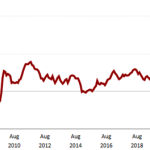
The Consumer Price Index (CPI) — a measure of the overall increase in the price level of goods and services — extended its cooling streak for the fifth consecutive month in August. CPI saw a modest 0.2% increase from the previous month and a 2.5% year-over-year rise (as shown in the below chart on the right-hand side), according to the Labor Department. Additionally, the unemployment rate unexpectedly dipped, providing the Federal Reserve with the data it needed to lower interest rates.
Featured Articles
- Analyst Insight
July CPI Data Supports A Rate Cut by the Fed in September
The headline Consumer Price Index (CPI) — a measure of the overall increase in the price level of goods and services — rose a modest 0.2% from the previous month, matching expectations, and increased 2.9% year-over-year, according to the Labor Department’s July report.


- Blog
What a Fool Believes - Will Crude Oil Hit $100 a Barrel?
After the crude oil price crash in the spring of 2020 and flat-at-$40/bbl oil last summer and early fall, prices for both WTI and Brent have been increasing steadily the past several months, and now stand at a kind-of-remarkable $75/bbl. This rise has been driven by a combination of demand recovery and supply restraint from both OPEC+ and U.S. producers — which begs the questions: what’s next on the supply and demand fronts, and how much more will oil prices increase from here? There’s been a lot of chatter lately that we might see $100/bbl crude prices sometime soon, and there are a lot of interested parties — many of whom don’t normally see eye-to-eye — who, for one reason or another, see their interests converge around the $100/bbl mark. The only problem is, it’s not showing up in the forward curve. Today, we look at the potential for “Benjamin-a-barrel” oil and how it might play out.


- Blog
Keep on Dancing - Exploring the Drivers of Burgeoning Upstream Consolidation
Brutal arctic cold may have chilled broad swaths of the U.S. last month, but the scorching pace of upstream M&A activity continued to be red hot, with nearly $20 billion in deals announced in January after a record-setting 2023. Last year’s transaction value totaled an astounding $192 billion, a mark 79% higher than the previous 10-year high and more than the previous three years combined. Why the surge? A wide range of factors influenced corporate decisions to grow through acquisitions rather than organic investment, including commodity prices, equity values, debt levels, operating costs, and production trends. In today’s RBN blog, we’ll analyze M&A trends through several statistical lenses and provide some insights into 2024 activity.
