


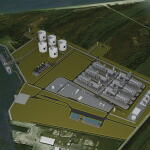
Commonwealth LNG has passed yet another hurdle on its way to FID. Yesterday, the FERC issued the final supplemental environmental impact statement (SEIS). The regulator concluded that National Ambient Air Quality Standards (NAAQS) exceedances for 1-hour NO2 may be significant; however, it concluded that the previously released mitigation steps are enough to compensate for this problem and that no additional measures need to be taken. A 1-hour exceedance occurs when a measured or modeled NO₂ concentration exceeds the specifications for a location. Meaning that air pollution is expected to get too high during the worst hour of the day, too often, over the course of three years. This document is subject to public comment before it is adopted. The review was ordered by a court that found the FERC had not previously evaluated this scope sufficiently.
Featured Articles


Hot Stuff - With Cheniere's Midscale Expansion, the Future of U.S. LNG Looks Hotter Than Ever
It’s shaping up to be an incredible year for U.S. LNG growth, with record levels of feedgas demand and exports along with progress on the regulatory front, as the Trump administration has cleared away hurdles that had previously stalled project development. Now, Cheniere Energy has announced a positive final investment decision (FID) on its Corpus Christi Midscale expansion. In today’s RBN blog, we take a closer look at the Midscale project and others that could move forward this year.

Tired of Waiting for You - U.S. LNG at a Standstill Waiting Out Construction, Regulatory, Legal Delays
Russia’s invasion of Ukraine and Europe’s subsequent pivot away from Russian natural gas caused a huge resurgence in interest in U.S. LNG. That led to nearly 60 MMtpa (7.9 Bcf/d) of new U.S. LNG capacity reaching a final investment decision (FID) in 2022-23. But regulatory delays at the Federal Energy Regulatory Commission (FERC), the Biden administration’s pause on non-free-trade-agreement (non-FTA) export licenses, and legal challenges to the FERC approval process have essentially halted LNG development in the U.S. There are several LNG projects with enough commercial momentum to move forward that are stuck in regulatory or legal limbo, but even projects that have reached FID are not safe from legal challenges. In today’s RBN blog, we conclude our series on LNG delays by looking at recent court rulings and other regulatory issues and their impact on U.S. LNG development.


Take Five - Gauging the Impact of the DOE's Pause in LNG Export Licenses
There’s no doubt about it: The Biden administration’s decision to pause approval of LNG export licenses poses a new threat to a number of projects thought to be nearing a final investment decision (FID). The questions brought on by the move are profound: how big of a problem is this for U.S. developers, how does the timeout affect the projects now in limbo, and — over the longer term — what does the added uncertainty regarding incremental LNG exports mean for U.S. crude oil and natural gas production and what does it mean for the global energy landscape? In today’s RBN blog, we discuss the factors that led to the administration’s announcement — and the case to be made that expanded LNG exports are in the U.S.’s economic and strategic interest.
