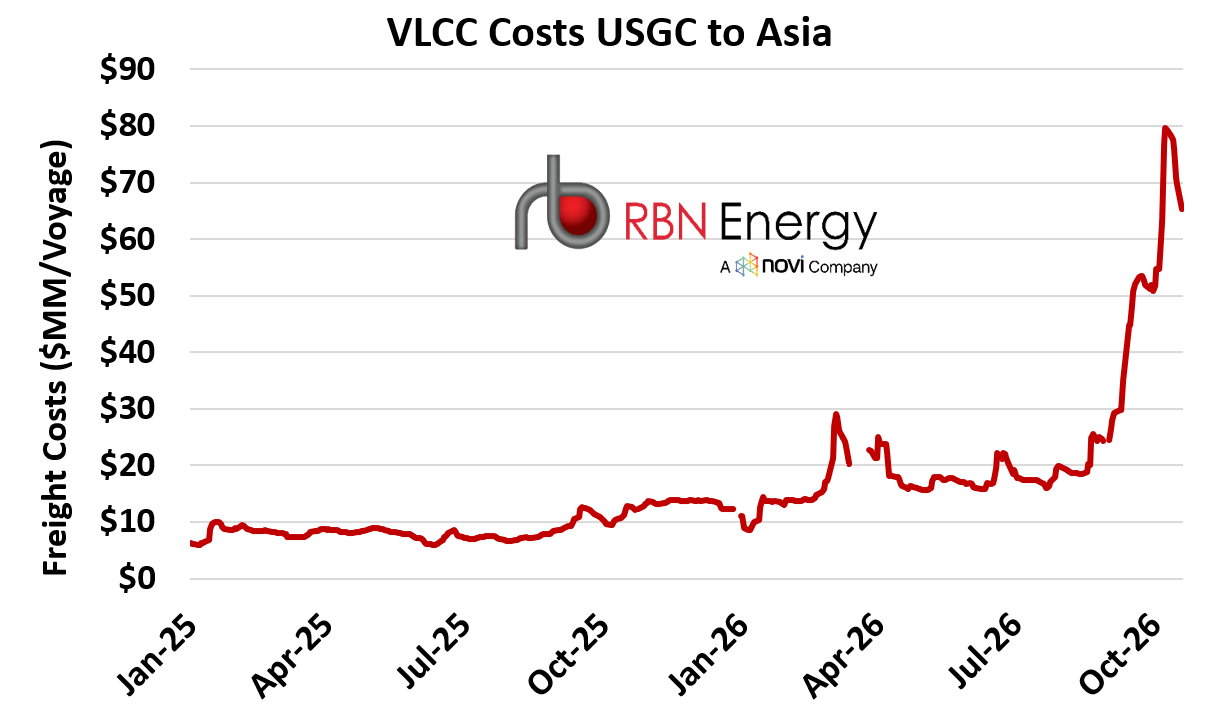
Shipping costs have repeatedly made headlines in 2026, constantly resetting expectations for what it costs to move U.S. barrels overseas. Freight rates, representing the cost to charter a vessel to transport commodities such as crude oil, finally took a breather last week but remain several times historical levels.
In early March, the cost of chartering a Very Large Crude Carrier (VLCC) from the U.S. Gulf Coast to Asia nearly doubled in a 10-day period, skyrocketing to a then-record $29 million per voyage ($14-$15/bbl if divided by the typical 2 MMbbl VLCC cargo size). This hefty freight bill was nearly four times the cost to charter a vessel of the same size on the same route the prior year and seemed astronomically high compared to history. However, in subsequent months, new highs were constantly reached and records continued to be broken, with recent freight costs making March’s peak look modest by comparison. Earlier this month, on October 9, the cost to charter a VLCC to Asia had skyrocketed to $80 million per voyage, equivalent to $40/bbl for a 2 MMbbl cargo. As discussed in our recent TradeView and Crude Voyager reports, USGC-to-Asia VLCC costs eased 12% last week, closing October 16 just under $70 million per voyage (far right of red line in chart below), or approximately $34–$35/bbl. Although rates declined slightly week-over-week, the shipping bill remained more than twice March’s once-staggering record and nearly six times the comparable year-ago cost. Even after the pullback, all eyes remain on freight costs as transportation remains a major factor for U.S. crude sales into international markets.