In the U.S., crude oil trading hubs like Houston, Midland and Cushing get the lion’s share of the market’s attention. But travel a bit further north and you can find one of the more unusual and liquid crude markets in the country — Guernsey, WY — a focal point for producers in Western Canada, North Dakota, Wyoming, Utah and Colorado. Over the last few months, Guernsey differentials have tightened significantly, finally flipping to a premium to Cushing. We have seen this phenomenon occur before, most notably seven years ago after the startup of the Dakota Access Pipeline (DAPL). In today’s RBN blog, we discuss the recent movement in Guernsey differentials and what the future could hold for the often-overlooked sales point.

Canadian crude output is rising, requiring new export routes. As traditional pathways face constraints, the U.S. Rockies—especially the Guernsey, WY hub—are emerging as key corridors for moving Canadian heavy crude to downstream markets, including the Gulf Coast.
Guernsey doesn’t often get the publicity that some other trading areas receive, but as the primary Rockies crude oil trading hub it deserves more attention. Guernsey has a plethora of pipeline connectivity and oil tankage that allows it to receive crude from Canada and the Bakken, as well as local Powder River Basin (PRB) production. All told, more than 300 Mb/d of Bakken production can reach the hub via Bridger Pipeline’s Belle Fourche (dark-purple line in Figure 1 below) and Butte systems (light-purple line), with another 280 Mb/d of Canadian production via Enbridge’s Express Pipeline (bright-pink line). Express dovetails with the Platte Pipeline (orange line) at Casper, WY, and then continues on through Guernsey.
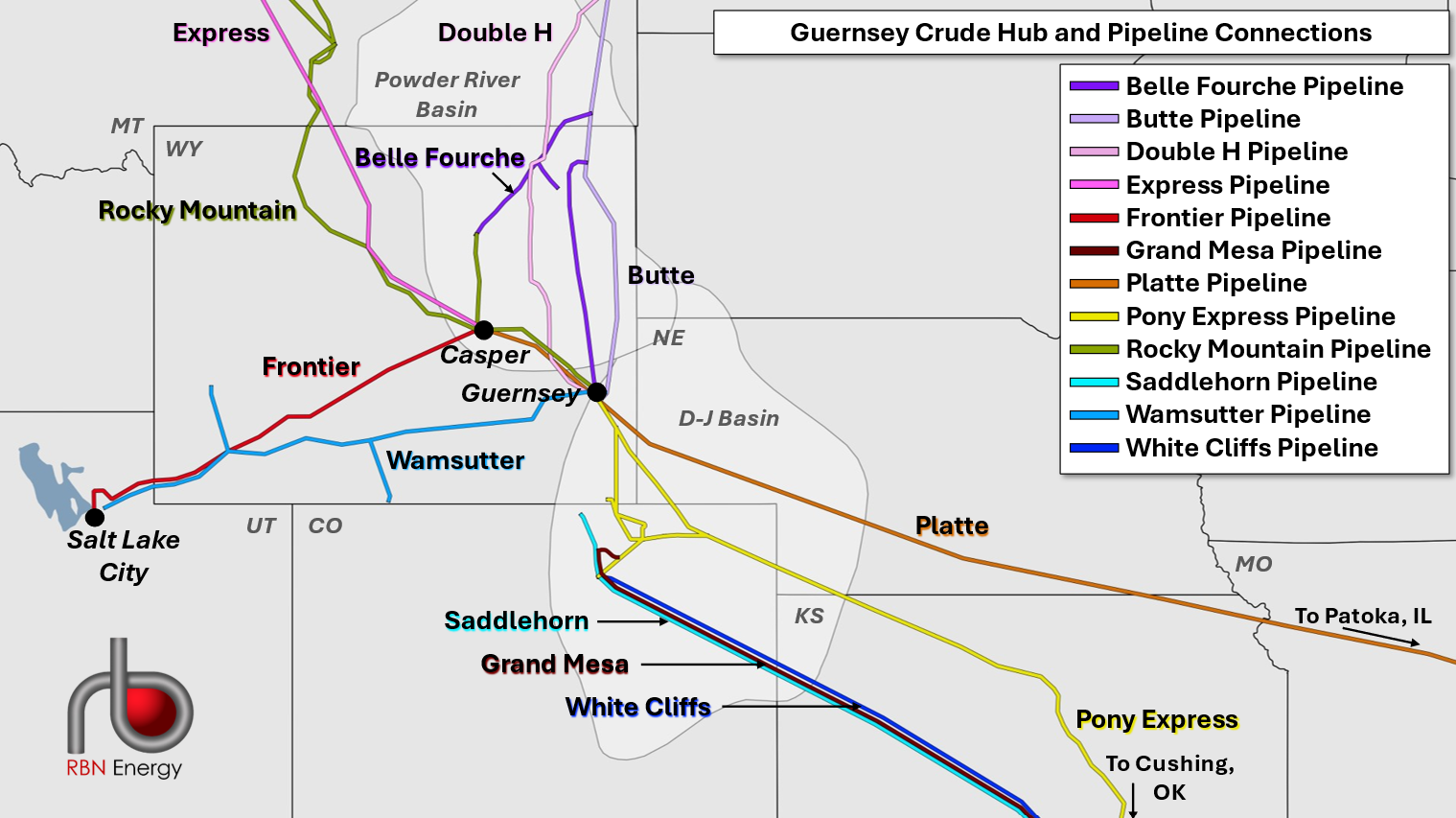
Figure 1. Guernsey Crude Hub and Pipeline Connections. Source. RBN
Outbound, Guernsey can deliver directly to the benchmark hub and storage facilities at Cushing, OK; refining markets, including Patoka and Wood River in Illinois (the key hubs for PADD 2 refineries); and the not-so-distant refineries in Salt Lake City. Platte Pipeline can deliver 145 Mb/d to Patoka and Wood River. Pony Express (yellow line), the largest system out of Guernsey, can send 230 Mb/d of light, sweet crude and other grades to Cushing. Guernsey also has indirect connections to the Saddlehorn Pipeline (aqua line), which like Pony can move barrels to Cushing.
About the song
“What Happened in Wyoming” was written by Envoi and appears as the fourth song on Envoi’s first studio EP, the six-song Changes. Envoi vocalist Madeline (Maddie) Finn explains that “What Happened in Wyoming” is about Matthew Shepard, who was tortured and murdered for being gay in Laramie, WY, in October 1998. Finn, who is influenced in her lyrics by current events in the LGBTQ community, said, “I took my emotions about that event and ran with it.” Personnel on the record were: Maddie Finn (vocals), David Tirpak (lead guitar), Steve Perrino (rhythm guitar), Matthew Calwell (bass) and Joe Czekaj (drums).
Changes is the first studio EP from Cleveland punk-pop band Envoi. Released in April 2013, it has generated 40 million streams. The hard-driving EP enabled the band to tour and expand its fan base. Two singles were released from the EP.
Envoi was an American punk-pop band from Cleveland, formed in 2012. The band started as a post-hardcore band but changed direction to a more pop sound after the addition of vocalist Maddie Finn. Their influences include Tool, Foals, The Swellers, and Quadrophenia-era Who. They have released two studio EPs and four singles. The band broke up in 2015 and reformed in 2024 to record and release their second EP, Seasons. After playing dates to promote the EP, they broke up again in early 2025. Singer Maddie Finn is pursuing a solo career with a folk-rock direction and has released four songs available for download. She will be appearing next at The Blue Room in Nashville in September.