For all who thought an energy transition was going to be orderly, economic, or rational, the chaos of 2021 energy markets is a wake-up call. It’s not that the shift from fossil fuels to renewables is causing most of the market turmoil, but it is certainly magnifying the effects of a host of energy market glitches that, together with the mechanics of the transition, are wreaking havoc on the global economy. Which underscores the challenge of this generation: We must live, work, and produce hydrocarbons the way the world functions today, while at the same time preparing for — and investing in — a much-lower-carbon future. As we’ve heard this week from Glasgow, it’s a future that a lot of folks believe means net-zero greenhouse gas emissions and no hydrocarbons. That challenge is the underlying theme for RBN’s Fall 2021 School of Energy, to be held next week, November 9-10. Not only have we restructured our agenda to include a half day covering the impact of hydrogen, CO2 sequestration, and renewable diesel, we’ve reworked and updated our core hydrocarbons market curriculum to examine how crude oil, natural gas, and NGL markets will evolve to accommodate what lies ahead. In today’s encore RBN blog edition — a blatant advertorial — we’ll consider these issues and highlight how our upcoming School of Energy integrates existing market dynamics with prospects for the energy transition.

The Natural Gas Master Class is a one-day online event focusing on understanding flow analysis, interpreting pipeline data and forecasting future flows. This course is designed to equip you with the knowledge and skills to effectively analyze the complexities of natural gas markets, flow analysis, and pipeline modeling. Join us online
October 21 | Online
Let’s look at some symptoms of the transitional trauma. As shown in the graph on the left in Figure 1, over the past year, WTI Cushing crude oil prices are up 70%, from less than $50/bbl to the $80/bbl vicinity. The price of U.S. crude is now higher than it has been since the 2014-15 crash. It is an even bigger deal in the Permian, the fastest-growing basin in the U.S. for the past seven years. Even when the Permian was going gangbusters, production was constrained due to inadequate pipeline takeaway capacity, reducing the price that many Permian producers could realize on their volumes. In 2018, the crude price in Midland was $7.24/bbl below Cushing. Today those constraints are gone, and Midland prices have averaged $0.25/bbl above Cushing over the past month.
Have higher prices mattered? Hardly at all. The graph on the right in Figure 1 shows that U.S. crude oil production has barely budged since the COVID-19-induced crash of April 2020 pushed output down from about 13 MMb/d to about 11.5 MMb/d in the most recent EIA stats. While the Permian has seen some growth, most of the other basins are flat to down. Whether you call it producer discipline, capital constraints, or E&P reluctance to invest during uncertain times, the result is the same: A vastly muted response to higher prices, which itself contributes to still higher prices. The old oil patch adage that “High prices are the cure for high prices” seems to have been repealed. What does that mean for production forecasting assumptions and models? That’s on our agenda for School of Energy.
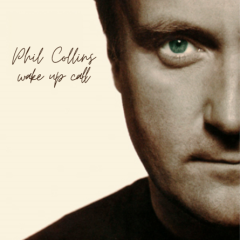
About the song
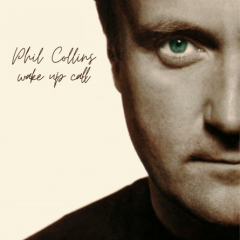
"Wake Up Call" was written by Phil Collins, and appears as the first song on Collins's seventh solo studio album, Testify. The song was released in the UK as a single in March 2003. Personnel on the record were: Phil Collins (vocals, all instruments except for guitars and bass), Tim Pierce (guitars), Paul Bushnell (bass), and James Sanger (programming).
Testify was recorded in 2000-02 at Collins's home studio in Switzerland, with additional recording done in France and Los Angeles. Produced by Collins and Rob Cavallo, the album was released in November 2002. It went to #30 on the Billboard Top 200 Albums chart. Three singles were released from the LP.
Phil Collins is an English singer, songwriter, musician, record producer, and actor. He was best known as the drummer, then lead vocalist for the rock band Genesis until 1996, when he officially left the band for the first time to focus on his solo career. He has participated in a couple of Genesis reunions, including the recent The Last Domino? Tour, which has been rescheduled twice due to COVID. Collins released 13 studio albums and one live album while a member of Genesis. As a solo artist he has released eight studio albums, one live album, four compilation albums, two soundtrack albums, one EP, and 50 singles. Collins has sold over 150 million records worldwide. He has won eight Grammy Awards, three American Music Awards, six Brit Awards, four Billboard Music Awards, six Ivor Novello Awards, one MTV Video Music Award, and two Golden Globe Awards, and was inducted into the Rock and Roll Hall of Fame in 2010 as a member of Genesis. As a solo performer, he is a member of the Songwriters Hall of Fame. Collins continues to write and record, and occasionally perform live.