

- Blog

The Marcellus Changes Everything: Gas Flows, Transport Contracts, Basis – Part II

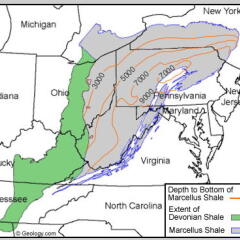
Just a couple of days after we talked here in Marcellus Changes Everything about the rupture in the space-time continuum’ between Tennessee pipeline’s Marcellus Zone 4 and the market area Zone 6, prices really blew out. Zone 6 traded last Wednesday at almost $8.50/MMbtu, responding to hot weather, nuclear outages and pipeline maintenance.  Poor Marcellus actually fell to $0.88/MMbtu on Tuesday, before seeing some response to the blowout 100 miles down the road and getting to $1.75 on Thursday.  But that only lasted as few hours. See our updated Zone 6 versus Zone 4 differential graph below.  Why would we see such a blowout this time of year?  Is this the kind of price behavior we can expect in the Northeast in the shale era?  Today we’ll take a look at these questions and more related to Marcellus shale production and natural gas pipeline capacity in the Northeast.

- Blog

The Marcellus Changes Everything: Gas Flows, Transport Contracts, Basis

Subtitle: Rupture in the Space-Time Continuum

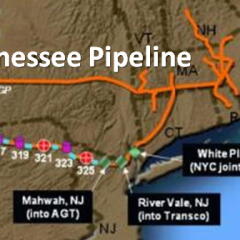
Yesterday the highest and lowest natural gas prices in the country were only 100 miles apart - on the same pipeline. Weird stuff like this happens in the middle of winter, but not in late spring. The pipe is Kinder Morgan’s Tennessee Pipeline, a.k.a, TGP.  The lowest price in the country based on ICE next day cash market trading was TGP-Zone 4 Marcellus, averaging $1.65/MMbtu for the day.  The highest price was just 100 miles east in TGP Zone 6 at $2.56/MMbtu.  In today’s world of tiny natural gas basis differentials (Honey, I Shrunk the Basis), this is an incredible shoulder-season differential of more than $0.90/MMbtu.  What could cause such a rupture in the space-time continuum?   How long will the situation continue?  Why does this development portend dramatic, long-term changes in natural gas flows across North America?  Of course, the culprit is the Marcellus, where production is still roaring regardless of low gas prices. Today we’ll look at the impact of all this new production just a hop, skip and jump away from the biggest natural gas markets in the country.