To closely analyze the natural gas market is to be constantly bombarded with vast amounts of information — weather forecasts, pipeline flows, LNG feedgas, power demand and storage — that is frequently updated, impacting both spot and future prices. But before you can get into the deeper analysis, you’ve got to understand the natural gas value chain and its terminology. In today’s RBN blog, we’ll explain the various terms used to describe natural gas as it moves from wellhead to consumer.
The replay of our Fall 2026 School of Energy (September 9 & 10, Houston) is now available online!
Learn from RBN experts, participate in hands-on Excel modeling, connect with industry peers, and gain a stronger understanding of today's interconnected energy markets.
Natural gas is one of the most widely tracked and traded commodities in the world and, while it may seem straightforward on the surface, the devil is in the details. There’s way too much terminology in the gas business to try to cover it all in a single RBN blog so we are going to sidestep topics like landfill gas, biogas, acid gas and any other gas that differs from the norm, either by its origin or its chemical makeup. And we will also stay away from certain terms crucial to the engineering side of the business, such as flanges and casing heads. Instead, our focus will be on the main metrics of gas production and how they diverge. When trying to analyze production data, outsiders often quickly become tangled up in the different figures for gross withdrawals, marketed production and dry gas production. Today, we will dispel some of that confusion.
In this journey through gas industry lingo, we will be referring to the terms used by the Energy Information Administration (EIA). As the federal government has access to data sources on the U.S. energy business that are inaccessible to others, its historical data serves as a baseline for natural gas-related statistics. That is not to say that market participants and observers never disagree with the EIA’s data, just that they generally go by the same nomenclature and definitions. We’ll be diving into the way EIA defines supply and demand measures, so see the schematic in Figure 1 below if you need to get your bearings on how the definitional chain operates. These definitions don’t precisely follow points in the physical flow of gas — keep that in mind as we discuss these terms. The four steps noted below are used to establish the different classifications of natural gas production. Later, we will compare these four steps to the actual movement of gas in the system and discuss how it differs from the definitional framework.
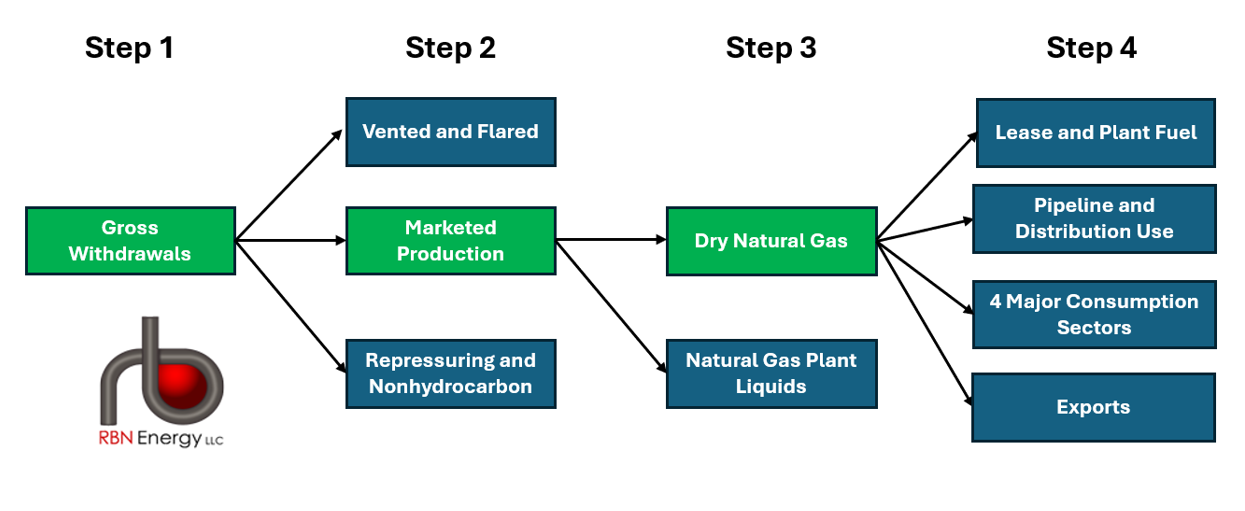
Figure 1. Natural Gas Production Classifications. Source: RBN

About the song
“Montero (Call Me by Your Name)” was written by Montero Hill (Lil Nas X), Denzel Batiste, David Biral, Omer Fedi and Rosario Lenzo. It appears as the first song on Lil Nas X’s debut album, Montero. Released as a single in March 2021, it went to #1 on the Billboard Hot 100 Singles chart and has been certified 6x Platinum by the Recording Industry Association of America. Columbia Records edited a clean snippet of the song that was previewed in a commercial for Logitech during Superbowl LV in February 2021. We here at RBN are leaving it up to our readers to search out the complete (and controversial) video with explicit lyrics if you wish. Personnel on the record were: Lil Nas X (lead, backing vocals), Denzel Batiste, David Biral (bass, keyboards, programming, backing vocals), Roy Lenzo (programming, backing vocals), and Omer Fedi (guitar, keyboards, programming, backing vocals).
The album, Montero, was recorded during 2019-20. Some of Lil Nas X’s collaborators on the album were Elton John, Doja Cat, Megan Three Stallion and Miley Cyrus. The album's music is rooted in hip-hop, with flavors of pop, hard rock and R&B thrown into the mix. Produced by Take a Daytrip, Omer Fedi, Roy Lenzo, Jasper Harris, Tom Levesque, Kanye West, Nick Lee, Blake Slatkin, Ryan Tedder, KBeaZy, Jasper Sheff, John Cunningham, Carter Lang, Mira, and DT, the album was released in September 2021. It went to #2 on the Billboard 200 Albums chart and has been certified Platinum by the RIAA. Five singles were released from the LP.
Lil Nas X (Montero Lamar Hill) is an American rapper, singer and songwriter. His country-rap single, “Old Town Road,” helped establish him as a major player, becoming the longest-running (19 weeks) #1 single since the Billboard Hot 100 Singles chart began in 1958. He has released one studio album, two EPs, and 18 singles. He has won two American Music Awards, five Billboard Music Awards, two Grammy Awards, five MTV Video Music Awards, and a Hal David Starlight Award from the Songwriters Hall of Fame. In January 2024, he released two new singles: “J Christ” and “Where Do We Go.” He continues to record and tour.