Crude oil markets have been anything but dull lately. After imploding to unimaginable, negative values last month, prices have been on a tear since and are now sitting in the low $30s/bbl range. That’s not great for producers, but kind of like social distancing flattens the curve, the current price level should keep production volumes in check and stave off the worst of the potential financial distress for most Permian producers, for now. So, what has been driving the price rise? Similar to the pauses in economic and social activity that many cities have taken lately, many Permian producers have recently decided to take a wait-and-see approach on crude prices and throttle back output. Today, we provide an update on the always-dynamic Permian Basin crude oil market and how producer curtailments have materialized in May.
Oil markets have seen more rapidly moving developments over the last few weeks than are usually observed over the course of a year, or more. Just last month we were here describing the unprecedented drop of crude oil prices to negative values in One Way Out. The Permian Basin wasn’t immune to that negative price plunge, as we outlined in It’s Always Somethin’. And, it hasn’t been just the absolute price that has been impacted in the Permian; the price spread between the Permian’s Midland Hub and the Cushing, OK, hub has also been upended a few times recently, a dynamic we detailed in Stuck in Midland With Crude. Today, we take a look at the latest development driving the Permian: crude oil curtailments that hit at the beginning of May and have been roiling the basin’s oil supply and demand balance ever since.

Join Backstage Pass, your gateway to exclusive industry insights, connections, and resources across energy markets. Gain direct access to RBN's extensive archive covering crude oil, NGLs, LNG, natural gas, refined products, renewables, and energy transition.
If you haven’t been keeping up with all our crude analysis, just know that the dramatic price sell-off that occurred last month was driven by too much supply and not enough demand. With demand still depressed due to COVID, producers have been forced to pull on the only lever at their disposal and make the distasteful decision to reduce output. For more on the factors driving the decision to curtail, see our blog on the subject from a few weeks back, Shut Down. If you read that entire article, you’d know that the decision to shut in production is going to vary widely by producer, but price is ultimately the biggest economic factor in that choice. Given that prices were so weak at the end of April, it was little surprise that many producers were quick to announce production curtailments for May. For example, EOG Resources announced in its recent quarterly earnings call that it would shut 125 Mb/d of oil production in May, with a large chunk of that assumed to be in the company’s Delaware Basin operations. Pioneer Natural Resources also announced its decision to curtail May production, although by just 8 Mb/d and primarily from vertical wells in the Permian. Other producers were generally somewhere in between those two, with a wide range of decisions made among the various Permian operators, but almost all announcing some form of cut to this month’s volumes. What’s more, many have already said that some level of production cuts would likely remain in place in June, and maybe beyond.
About the song
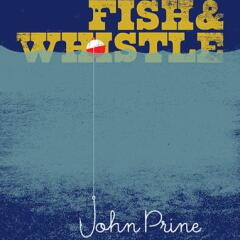
"Fish and Whistle" was written by John Prine and appears as the first song on Prine's fifth studio album, Bruised Orange. Prine said he wrote "Fish and Whistle" because he just "decided to write a song about what was going on around me," and he started it with the line about the car wash down the street from where he lived, and developed it from there.
Bruised Orange was recorded between January and March 1978 at Chicago Recording Company in Chicago, with Steve Goodman producing. Prine had started working on the record in Nashville with producer Cowboy Jack Clement, but they couldn't seem to get anything down on tape, so he switched locales to Chicago, with Goodman producing. Personnel on the record were: John Prine (vocals, acoustic guitar), accompanied by an all-star cast of 26 musicians, including Jethro Burns, Ramblin' Jack Elliot and Jackson Browne. The album was released in September 1978, and went to #116 on the Billboard 200 Albums chart.
John Prine was an American country folk singer-songwriter. He was known for a humorous, ironic style of Americana music that was rife with elements of protest and social commentary. From the Chicago area, Prine was a mail carrier for years while becoming a performer in Chicago's folk music scene. Discovered by Kris Kristofferson and buoyed by a rave review by Chicago critic Roger Ebert, Prine signed a deal with Atlantic Records, and released his debut album in 1971. He released 18 studio albums, five live albums, two compilation albums and 32 singles. He has won three Grammy Awards and a Grammy Lifetime Achievement Award. He is a member of the Songwriters Hall of Fame. Rolling Stone Magazine called him "the Mark Twain of songwriting." Prine died in Nashville in March 2020 of COVID-19 at the age of 73.