Battered by a flood of new supply and limited pipeline takeaway capacity, prices for Permian natural gas and crude oil have spent a lot of time in the valley over the past 18 months. West Texas Intermediate (WTI) crude oil prices at the Permian’s Midland Hub traded as much as $20/bbl less than similar quality crude in Houston last year. That’s a big oil-price haircut that producers have had to absorb while ramping up production. However, the collapse in the Permian crude oil differential was tame compared to what happened with Permian natural gas prices. Prices at the Waha Hub in West Texas traded as low as negative $5/MMBtu, a gaping $8/MMBtu discount to benchmark Henry Hub in Louisiana. As bad as that all was, new pipeline takeaway capacity has arrived, and Permian prices are beginning to claw their way out of the depths. Today, we look at how new pipelines are impacting the prices received for Permian natural gas and oil.
There have been some ugly periods for Permian oil and gas prices over the last year or so, as production growth began bumping up against available pipeline capacity to move the products to market. WTI crude oil prices at Midland sagged heavily versus prices along the Texas Gulf Coast, as measured by the price at the Magellan East Houston (MEH) crude terminal. We covered this blowout in Permian oil basis — the difference between two price hubs — last year in our blog series All Dressed Up With Nowhere To Go. The pricing anomalies were even more severe in the natural gas markets — Waha gas basis blew out to record lows this spring, as associated gas volumes from oil-focused drilling sent absolute gas prices well below zero, as we detailed in Don’t Dream It’s Over. But just as sharply as they fell, outright prices and basis levels for both commodities have snapped back up as pipeline projects were completed, and they look to remain supported — at least for a little while. That’s because both markets have seen a boost in pipeline capacity from recent project completions. Producers now have somewhere to go — the attractive Texas Gulf Coast markets — and, finally, available transportation to get there. That has oil and gas producers and marketers breathing a sigh of relief.
Crude Oil Permian provides detailed analysis of the fundamental drivers impacting the Permian Basin crude oil market including weekly data, analysis and market intelligence updates of: Permian crude oil supply and demand, pipeline outflows and capacity, prices, and infrastructure updates.
Figure 1 illustrates the dramatic shift in regional oil-price spreads in response to recent pipeline expansions. The solid purple line in the graph shows the monthly average difference between the price producers received for WTI at Midland versus the price of similar quality crude at the target destination market in Houston (MEH). (The negative values in the graph reflect the Midland price discount to the MEH pool.) At the lows last year, the Midland-MEH spread expanded to almost negative $20/bbl in August and September (dashed red circle in Figure 1), and widened to as much as negative $23.95/bbl on September 4, 2018. That’s a huge spread, far greater than the cost to transport crude oil from Midland to Houston and indicative of just how constrained the pipelines leaving the Permian had gotten.

About the song
"Higher Ground" was written by Stevie Wonder, and appears as the first cut on the second side of Wonder's 16th studio album, Innervisions. Incredibly, Wonder wrote, played all the instruments and recorded the song in only three hours. The song is one of the first recordings to showcase the Hohner Clavinet keyboard, which Wonder played with a wah-wah pedal through a Mutron III envelope filter. The lyrics in the song reflect Wonder's feelings about reincarnation and spirituality. "Higher Ground" was recorded at The Record Plant in Los Angeles, and released as a single in July 1973. It went to #1 on the Billboard Hot R&B Singles chart, and #4 on the Billboard Hot 100 list.
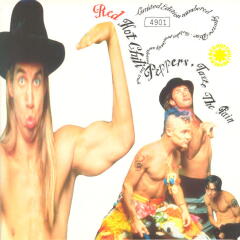
The Red Hot Chili Peppers released a cover of "Higher Ground" as the first single from their fourth studio album, Mother's Milk. It went to #11 on the Billboard Modern Rock Tracks chart, and #25 on the Hot Mainstream Rock Tracks list. Personnel on their version was: Anthony Kiedis (lead vocals), John Frusciante (guitar, backing vocals), Flea (bass, backing vocals) and Chad Smith (drums, tambourine).
Innervisions was recorded at The Record Plant in Los Angeles, and Media Sound Studios in New York City, with Wonder producing all the tracks. The album was released in August 1973, and went to #1 on the Billboard Soul LP chart, and #4 on the Billboard Top 200 Albums list. Wonder sang all the lead vocals and was assisted in the studio by Dean Parks, David Walker and Ralph Hammer on guitar, with Willie Weeks and Malcom Cecil on bass. Wonder played all the other instruments on the record.
Stevie Wonder (Stevland Hardaway Morris) is an American singer, songwriter, musician, multi-instrumentalist and record producer. Blind since birth, Wonder was a child prodigy, signing with Motown's Tamla Records at the age of 11. With a career approaching six decades in length, he has released 23 studio albums, four live albums, 11 compilation albums, and 98 singles. Stevie has sold over 100 million records worldwide, and has won 25 Grammy Awards and a Grammy Lifetime Achievement Award. He is a member of the Rock and Roll Hall of Fame and Songwriters Hall of Fame, is a Gershwin Prize recipient, and has won a Billboard Century Award. Wonder also has been awarded a Presidential Medal of Freedom. He still records and performs.