Storm clouds may be gathering on the economic horizon as concerns about persistent inflation and looming recession roil markets and politics. But for oil and gas producers, the third quarter was the equivalent of a driver putting the top down under a flawless azure sky, dialing up the road tunes, and cruising without a care down an endless highway. Lower oil prices led to a dip in earnings and cash flow after a record-breaking second quarter, but cash still filled producers’ coffers at the second-highest rate in decades. In today’s RBN blog, we review the Q3 results of U.S. E&Ps and discuss what may lie ahead as those storm clouds move closer.

As we reported in Camelot, our blog on Q2 earnings, the 42 top publicly traded E&Ps we monitor took advantage of the highest oil prices in 14 years and surging gas realizations to post record quarterly earnings of $52.8 billion, which exceeded the $43.3 billion earned for the full year 2014, when oil prices last exceeded $100/bbl. In Q2, Oil-Weighted E&Ps posted earnings of nearly $50/barrel of oil equivalent (boe) produced, 150% higher than a year ago, and the Diversified producers were not far behind at $46/boe. Cash flows for the overall group totaled $65 billion in Q2 2022, up 170% from Q2 2021. The industry reported a 7% year-over-year increase in costs as lower depreciation, depletion and amortization (DD&A) charges partially offset a rise in cash costs, primarily price-related production taxes. We noted at the end of the blog that oil prices had retreated by over $10/bbl midway through the third quarter, suggesting that the Q3 2022 earnings would fall short of “Camelot” levels, but remain historically robust.
That forecast proved to be on target. Although the average West Texas Intermediate (WTI) oil price declined 14% from the previous quarter, revenue for the 42 E&Ps we track averaged $60.30/boe in Q3, just 6% lower than the $64.10/boe realized in Q2 2022, partially buoyed by higher natural gas prices. Realizations were 48% higher than in Q3 a year ago. E&Ps posted Q3 2022 pre-tax operating earnings of $49.6 billion ($37.69/boe), 9% below Q2 2022 results but 84% higher than in Q3 2021, still a historically significant performance, as shown in Figure 1.
About the song
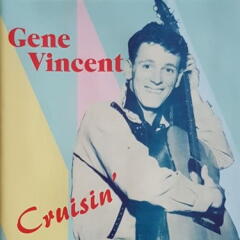
“Cruisin'” was written by Gene Vincent and Tex Davis and appears as the first song on side two of Gene Vincent and the Blue Caps’ second studio album, Gene Vincent and the Blue Caps. The song was recorded at Owen Bradley Studios in Nashville in October 1956 and released as a single in March 1957, but failed to reach the charts. Personnel on the record were: Gene Vincent (lead vocal, rhythm guitar), Cliff Gallup (lead guitar), Jack Neal (upright bass), and Dickie Harrell (drums, screams).
Gene Vincent and the Blue Caps was recorded at Owen Bradley Studios in Nashville with Ken Nelson producing. The album was recorded live in the studio, with no overdubs. Vincent was singing at the same time the band was playing, in the same room! It is truly mind-blowing to think of the symbiotic relationship between Vincent and the Blue Caps, producer Nelson, and engineers Owen Bradley and Mort Thomasson to create this live, monaural, echo-drenched masterpiece of early rock and roll. Bradley used baffles around the drums for the first time in his studio as drummer Dickie Harrell was hitting his drums so hard that they over-rode all the mics. Nashville had never heard a sound like this before. The album was released in March 1957 as a follow-up to Vincent’s debut LP, Bluejean Bop, which was only released four months earlier. The album, and two singles released from it, tragically didn't make the charts, due in large part to Capitol’s bewilderment of the chart success of “Be-Bop-a-Lula” and their inability to properly market and follow up its success with this wild, new music that the kids were going crazy over.
Gene Vincent (Vincent Eugene Craddock) was an American singer, songwriter and musician who was one of the early pioneers of rockabilly and rock and roll. He started his professional career in Norfolk, VA, in 1955 as leader and singer of his band, Gene Vincent and the Blue Caps (a term used in reference to enlisted sailors in the U.S. Navy — Vincent was a Navy veteran). After Vincent won a Norfolk talent contest hosted by local radio DJ, “Sheriff Tex” Davis, who became Vincent’s manager and helped him secure a deal with Capitol Records in Hollywood based on the strength of the demo for “Be-Bop-a-Lula,” which would become a Top 10 hit single. “Be-Bop-a-Lula” was recorded at Owen Bradley Studio in Nashville in May 1956. An interesting side note is that the screams heard in the background of the recording are from drummer Dickie Harrell, who claims he did those so “his mother could hear that it was him on the record.” Screams during future recordings would become a Blue Caps trademark. Over two million copies of “Be-Bop-a-Lula” have been sold to date worldwide. The song has been covered by many artists over the years. Vincent released 12 studio albums, 12 compilation albums, 11 EPs and 51 singles. He also appeared in four motion pictures. He is a member of the Rock and Roll Hall of Fame, the Rockabilly Hall of Fame, and has a star on the Hollywood Walk of Fame. Vincent died in Saugus, CA, at the age of 36. Writer Ritchie Unterberger called Vincent “an American rockabilly legend who defined the greasy-haired, leather jacketed, hot rods and babes spark of rock and roll.”