Wouldn’t it be nice if everything you needed to keep up with the market was right there on your phone or tablet? And it would be even handier if the data and stories organized themselves just for you, around topics you care about the most. Such a technology would address a formidable challenge we all face: keeping up with the torrent of market information coming at us from trading platforms, online services, trade publications, you name it. It would pull everything you needed into a single database and then organize information on the fly around whatever topic matters most to you at a point in time. And it would be able to reorganize that information on demand as market data ebbs and flows. Over the past few months, we’ve designed an app that tackles this challenge head-on. Today we are introducing the concept of ClusterX, explaining how it works, and giving you the opportunity to help us roll out our new technology to the RBN blogosphere. Warning: this is a blatant advertorial for our new energy market analytics app.
That’s right. Our new mobile platform is ClusterX. If you were wondering, the name is a reference to the underlying technology, which clusters related information together, so that the most important data for a given topic is front and center, and other, related data is logically organized around that central theme.
First, a few basics. It’s an app. It organizes and displays energy data. That data includes prices, differentials, ratios, industry statistics (for example, EIA data) and articles (i.e., RBN blogs). You’ll download the app from the App Store, log on, and be up and running.
Well, it’s not quite that simple. You need to know the basics about how to drive this thing, so you get the results you are looking for. Over the next few paragraphs, we’ll lay out the functionality of ClusterX so you can determine how helpful the app would be for you.
The Concept
ClusterX is built around the concept of cells (see Figure 1). A cell is a container for numeric data, text, images and videos. Cells contain discrete information content, formatted in a way that best depicts that content. The cell data is continuously updated as new data becomes available. The data comes from both public and proprietary data providers, and new cells are created when things happen.
About the song
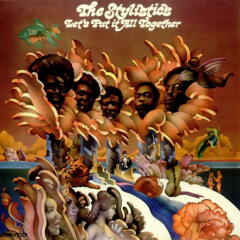
"Let's Put It All Together" was written by Hugo Peretti, Luigi Creatore and David Weiss, and appears as the first cut on the album of the same name by The Stylistics. The single of "Let's Put It All Together" reached #8 on the Billboard R&B Singles, and #18 on the Billboard Hot 100 Singles charts. Personnel on the record were: Russell Thompkins Jr. (lead vocals), Airrion Love, James Smith, Herb Murrell and James Dunn (background vocals).
The album Let's Put It All Together was recorded at Media Sound Recording Studios in New York City during the spring of 1974. This was the first Stylistics album recorded outside of the group's hometown of Philadelphia. Produced by Hugo and Luigi, it was released in May 1974. The album went to #4 on the Billboard Top Soul Albums, and #14 on the Billboard 200 Albums charts. It has been certified Gold by the Recording Industry Association of America.
The Stylistics are a Philadelphia soul vocal group formed in 1968. During the early 1970s, the group had 12 consecutive Top 10 R&B hits, featuring the falsetto lead vocals of Russell Tompkins Jr. They have released 34 albums and 50 singles, and are members of the Vocal Group Hall of Fame. Eleven members have passed through the ranks of The Stylistics since their formation. The current group of original members Airrion Love and Herb Murrell, joined by Jason Sharp and Barrington "Bo" Henderson, still tour as The Stylistics, and have dates in the U.S. scheduled now through September.