On Thursday, June 18, the Federal Energy Regulatory Commission (FERC) issued a Notice of Inquiry (NOI) to reset the index that’s used to make annual changes to the rate ceilings for interstate pipelines that transport crude oil, refined products, and other hydrocarbon liquids. Every year, the highest rate an indexed oil pipeline can charge goes up or down — almost always up — using the FERC index. The commission’s new proposal, which would become effective in July 2021, follows an already-approved index adjustment that will take effect a week from Wednesday, on July 1. Taken together, the two changes would reduce the maximum annual increase in the rate ceiling from more than 4% now to less than 1%, which could have a major impact on liquids pipeline owners. Today, we discuss the NOI, the meaning of the pipeline index, where it came from, and where it might be headed.

FERC’s regulation of liquids pipeline rates started in 1977, when the job was handed over from the Interstate Commerce Commission (ICC). Ultimately, FERC didn’t follow the same regulatory approach as the ICC; instead, over time it came up with its own way of doing things. FERC imposed cost-based regulation in 1988, with really complicated transition mechanisms, then it developed various other approaches when it became clear that oil pipelines weren’t an industry sector that did real well being regulated like a utility. Then, in 1992, Congress said, “You’re right. Oil is different.” So, in the Energy Policy Act of 1992, FERC was ordered to develop a simple, streamlined way to regulate oil pipeline rates (which, although they call it “oil,” involves all liquid hydrocarbons). Specifically, Congress said that FERC should add “flexibility and reduced regulation and efficiency in oil pipeline rates.” FERC complied with the law by issuing Opinion No. 561, which established the indexed approach.
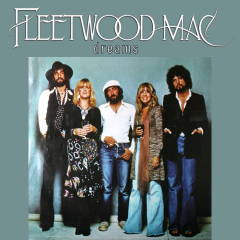
About the song
"Now here you go again" is the opening line of Fleetwood Mac's song, "Dreams," which appears as the second song on side one of Fleetwood Mac’s 11th studio album, Rumours. Written and sung by Stevie Nicks, it was released as the second single from the album in March 1977. The song went to #1 on the Billboard Hot 100 Singles chart and was certified Gold by the Recording Industry Association of America. Personnel on the record were: Stevie Nicks (lead, backing vocals), Lindsey Buckingham (guitars, backing vocals), Christine McVie (electric piano, organ, backing vocals), John McVie (bass), and Mick Fleetwood (drums, congas, vibraphone).
Rumours was recorded between February and August 1976 at Criteria Studios in Miami, as well as various studios in California, including Record Plant Studios in Los Angeles and Sausalito, Zellerbach Hall in Berkeley, Wally Heider Studios in San Francisco, and Davien Recording in North Hollywood. Fleetwood Mac, Ken Caillat, and Richard Dashut produced the album. Rumours was released in February 1977, and went to #1 on the Billboard Top 200 Albums chart. Four hit singles were released from the album, which was certified 2x Diamond by the Recording Industry Association of America.
Fleetwood Mac is a British-American rock band formed in London in 1967. It has sold over 120 million records worldwide. Fifteen members have passed through the band, which has released a total of 18 studio albums, nine live albums, 23 compilation albums, one EP, and 62 singles since its formation. The group won three American Music Awards, two Brit Awards, one Grammy Award, and is a member of the Rock and Roll Hall of Fame. The band still records and tours, with touring plans on hold due to COVID.