The vast majority of the incremental natural gas pipeline capacity out of the Marcellus/Utica production area in recent years is designed to transport gas to either the Midwest, the Gulf Coast or the Southeast. Advancing these projects to construction and operation hasn’t always been easy, but generally speaking, most of the new pipelines and pipeline reversals have come online close to when their developers had planned. In contrast, efforts to build new gas pipelines into nearby New York State — a big market and the gateway to gas-starved New England — have hit one brick wall after another. At least until lately. In the past few weeks, one federal court ruling breathed new life into National Fuel Gas’s long-planned Northern Access Pipeline and another gave proponents of the proposed Constitution Pipeline hope that their project may finally be able to proceed. Today, we consider recent legal developments that may at long last enable new, New York-bound outlets for Marcellus/Utica gas to be built.
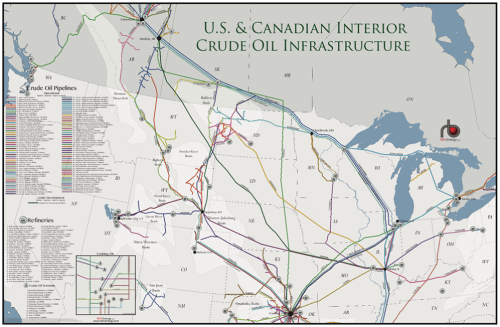
RBN's US & Canadian Interior Crude Oil Infrastructure Map features pipelines, refineries, and terminals that are new, existing, and under development from Canada to the Bakken Shale to Cushing.
More than four years ago, in our 50 Ways to Leave the Marcellus Drill Down Report, we discussed the race by midstream companies to add new gas pipeline takeaway capacity out of what was already the U.S.’s premier natural gas production area. By late 2014, production in the Marcellus/Utica was topping 18 Bcf/d and headed for 30 Bcf/d by 2019. Well, here we are in The Year of the Pig and, sure enough, production is at ~30 Bcf/d and most of the 40-plus takeaway projects we listed have been completed and are in operation. We looked at a number of the more recent takeaway additions in our “Waiting on the World to Change” blog series, including Williams/Transco’s 1.7-Bcf/d Atlantic Sunrise project, Enbridge/DTE Energy’s 1.5-Bcf/d NEXUS Gas Transmission, and TransCanada’s Mountaineer Xpress and Gulf Xpress, which together will allow another 1 Bcf/d to flow south/southwest out of the Marcellus/Utica.
As we said in today’s intro, many of the efforts to develop new gas takeaway capacity into New York — and beyond the Empire State into New England — ran into trouble early and often. There have been some successes, such as Williams/Transco’s New York Bay Expansion, which increased gas flows into New York City, and Enbridge’s Atlantic Bridge project, which boosted flows through the Big Apple’s northern suburbs and into New England. But those improvements were essentially expansions of existing pipelines and largely along existing rights of way. Two bigger-capacity pipeline projects in upstate New York — the 650-MMcf/d Constitution Pipeline (dashed yellow line in Figure 1) from northeastern Pennsylvania to just west of Albany, NY, and the ~500-MMcf/d Northern Access Pipeline (dashed red line) from north-central Pennsylvania to near Buffalo, NY — have been stalled for a number of years, mostly due to their failure to secure water-quality permits from the New York Department of Environmental Conservation (NYDEC).
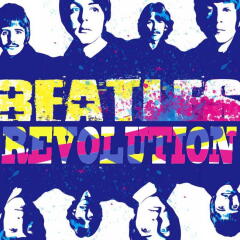
About the song
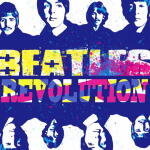
“You say you want a revolution” is the opening line in The Beatles’ landmark 1968 song, “Revolution.” The song was written by John Lennon and credited to Lennon and Paul McCartney. Two different versions of the tune were recorded at EMI Studios in London during July 1968. The slower, blues-y version appears on The White Album, and the faster version showed up as the B-side of "Hey Jude" — released in August 1968; it was the first single released on The Beatles' new record label, Apple. “Revolution” was produced by George Martin. John Lennon and George Harrison's unique fuzz-laden guitar sound for the song was produced by running the guitars through an over-driven tube microphone pre-amp before the signal hit the mixing console.
"Hey Jude," backed with “Revolution,” went to #1 on the Billboard Hot 100, and sold over 4 million copies. “Revolution” would become the first Beatles recording to be licensed for a television commercial, appearing in a Nike ad in 1987. The three surviving members of the band did not approve of this and sued Nike, resulting in an out-of-court settlement in their favor in 1989. Personnel on the song were: John Lennon (lead vocal and electric guitar), Paul McCartney (bass and backing vocals), George Harrison (electric guitar), Ringo Starr (drums), and Nicky Hopkins (electric piano). All of The Beatles provided hand claps on the tune.
The White Album was a double LP, and was released in November 1968. Most of the songs for the record were written during a two-month Transcendental Meditation retreat in India in the early spring of 1968 that the whole group attended. In May of that year the group convened in London at EMI Studios with George Martin to start work on their next album. The sessions were fraught with disharmony and arguments over creative differences. Lennon has commented that "the break-up of The Beatles can be heard on this album." The double album went to #1 on the Billboard Top 200 Albums chart; it returned to the Top 10 in the Billboard 200 upon the release of a 50th anniversary re-issue in November 2018.