


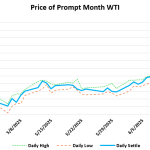
Crude oil prices surged as much as 14% intraday on Friday, June 13. On the evening of Thursday, June 12, Israel carried out airstrikes on Iran’s nuclear and ballistic facilities, elevating market fears of potential supply disruptions in the Middle East and specifically, from Iran. The next morning, oil prices skyrocketed. The price of NYMEX-CME Domestic Sweet crude oil— commonly known as the WTI prompt month futures contract, rose $9.58/bbl (+14%) to a high of $77.62/bbl (far right green dashed line on chart below) on Friday morning. This price surge marked the largest intra-day jump for WTI in three years since the Russian invasion of Ukraine in 2022.
Featured Articles
- Analyst Insight
Crude Oil Futures Plummet to Lowest Prices in Years
ICE Brent crude fell to its lowest price in three years.
- Analyst Insight
WTI Woes Worsen Amid Weakened Demand and OPEC+ Whiplash
WTI crude prices crater amid weakened demand and OPEC+ supply hike.

- Blog
It's Been a Long Time Comin' - $100/bbl Crude Oil Is Back. What Does It Mean? Will it Last?
Well, it took a hot war in Europe, constrained capital spending by U.S. producers, continued restrictions in OPEC+ production, and ongoing economic recovery from a global pandemic, but it’s finally happened: Brent shot past $100 and even $105/bbl Thursday before dropping in the last hour of trading to settle a hair above $99. Even WTI touched $100/bbl briefly. The market has been buzzing about the prospects for the breach of this threshold since October, coming along with waves of speculative trades, a dozen false starts, and countless pundit predictions. Now that it has happened, what does it mean — other than higher gasoline prices, of course? In the good ole days, high prices would spur production growth that would help bring prices back down — eventually. But this time, things are different. Which begs the #1 question: Will triple-digit oil prices last? In today’s RBN blog, we’ll consider these issues in the context of historical price behavior and what we might expect this time around.
