


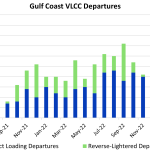
Crude oil exports in March were estimated at 4.1 MMb/d — the highest monthly volume from the U.S. Gulf Coast. A record number of Very Large Crude Carriers (VLCCs), 46, hauled these cargoes and departed the Gulf Coast with U.S. oil during the month, up one from the previous record set in December 2022. As seen in the graph below, more VLCCs received crude barrels via reverse-lightering in March.
Featured Articles
- Analyst Insight
USGC Crude Oil Exports Remained Strong in November
Data from RBN’s latest Crude Voyager report shows that nearly 4 MMb/d were exported from U.S. Gulf Coast export terminals in November, similar to the volumes loaded in October
- Analyst Insight
China Top Destination for VLCCs Hauling U.S. Crude in April
Data from the weekly Crude Voyager report shows that a record number of VLCCs, 15, departed with U.S. oil in the week ended April 21. Of these, six were scheduled to go to China — the highest number of vessels headed to a single destination in a week.


- Blog
Berth in Reverse - Reverse-Lightering Crude Oil Supertankers Along the Gulf Coast
There’s a reason why more than half a dozen midstream companies and joint ventures are clamoring to build deepwater loading terminals on the Gulf of Mexico: because it’s a major pain to load Very Large Crude Carriers (VLCCs) any other way. These days, the standard operating procedure for loading the vast majority of VLCCs along the Gulf Coast involves a complex, time-consuming and costly process of ship-to-ship transfers called reverse-lightering, in which smaller tankers ferry out and transfer crude to VLCCs in specified lightering areas off the coast. Today, we ponder the current dynamics for U.S. crude exports via VLCC.
