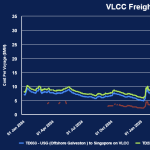
The start of March brought extraordinary volatility to crude markets. Multiple global benchmarks and regional grades posted sharp gains, with several trading at or near multi-year highs. As tensions in the Middle East escalated, markets began embedding a geopolitical risk premium tied to potential supply disruptions across the Persian Gulf and possible shipping constraints through the Strait of Hormuz, a key transit chokepoint that facilitates roughly 20% of global seaborne crude flows.
Price action in the prompt market was particularly aggressive, with both WTI and Brent benchmarks soaring to their highest prices since September 2023. WTI soared to settle at $90.90/bbl by Friday’s close, a jump of $23.88/bbl or 36% week-over-week. Brent soared to $92.69/bbl, up $20.21/bbl or 28% from the prior Friday close. Strength extended beyond outright prices, with time spreads and grade differentials widening materially. Dubai spreads expanded to roughly $14/bbl, reflecting significant tightness in Middle Eastern barrels.