


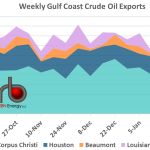
Crude oil loadings across the Gulf Coast fell to 3.6 MMb/d from last week’s 4.6 MMb/d. Given the substantial decline, it should be no surprise that almost every port experienced a drop, with many terminals loading no vessels at all. Only Houston managed to stay essentially flat, at 1.1 MMb/d. The big surprise was the even larger drop in European-destined cargos. They dropped in both share and absolute volume, down to 29% of U.S. exports at 7.5 MMbbl, the third-lowest level in 16 months.
Featured Articles
- Analyst Insight
Exports Rebound to 3.9 MMb/d
Crude Oil exports rebound with European volumes continuing to climb.
- Analyst Insight
Alberto Helps Push U.S. Crude Exports to Lowest Since July 2023
Crude oil loadings across the U.S. Gulf Coast plummeted by 1.4 MMb/d, dropping to 3 MMb/d — the lowest level since mid-July last year.


- Blog
Fear Inoculum - Oil Market Shows Concern, Not Panic, Over U.S.-Iran Face-Off
Fear about supply interruption isn’t the frantic force it used to be in the crude oil market. A deadly confrontation that might have pushed the U.S. and Iran to the verge of war raised the spot Brent crude oil price to above $70/bbl early in the week of January 6. Despite continuing regional concerns, the price quickly subsided. By January 13, Brent spot had fallen to $64.14/bbl, its lowest point since December 3. Before the Shale Era, a U.S.-Iranian face-off may well have launched Brent crude to well over $100/bbl as oil traders blew fuses over the heightened possibility of disruption to Persian Gulf oil production and transportation. There’s nothing like adequacy of supply, globally dispersed, to keep things calm — or at least calmer than they would have been if the U.S. and Iran had drawn so much sword a dozen years ago. In this blog, we’ll discuss where U.S. crude exports have been heading, how close the oil gets to strategically touchy areas, and whether the market still has reason to worry about disruption to oil supply.
