


Hydrogen Hub Proposals to the DOE
If clean hydrogen is not a significant contributor to the U.S. energy mix by the 2030s, it won’t be because Congress and the Biden administration didn’t try. First, last year’s Bipartisan Infrastructure Law provided the Department of Energy (DOE) with up to $8 billion to support the development of several regional hydrogen hubs, plus another $1 billion to back efforts to halve the cost of producing hydrogen via renewables-powered electrolysis. Then, this year’s Inflation Reduction Act (IRA) provided tax credits for investing in new production facilities and producing clean hydrogen — incentives generous enough to spur announcements for at least an initial round of multibillion-dollar projects. In today’s RBN blog, we discuss highlights from our new Drill Down Report on the variety of hydrogen-hub proposals the feds will be reviewing.
Given the magnitude of the financial support and the desire of public and private entities to be part of the energy transition, it’s understandable that the DOE received a host of hydrogen-hub concept papers from project proponents by last month’s deadline. The department hasn’t provided any details, but a number of states, groups of states, public/private partnerships and others have indicated that they submitted proposals — and a small handful have made at least part of their concept papers public. Over the past several weeks, the DOE has been reviewing the concept papers it received and providing initial feedback. Full-and-final applications must be submitted by April 7, 2023.
The DOE expects to notify the winners next fall and complete award negotiations with them in the winter of 2023-24. It’s anticipated that most of the selected proposals will each receive between $500 million and $1 billion in federal support — that’s not chump change! — though it’s possible that a proposal could receive as little as $400 million or as much as $1.25 billion, depending on its size and need.
The department’s September 22 Funding Opportunity Announcement (FOA), which officially launched the process of receiving and reviewing hydrogen hub proposals, defined a clean hydrogen hub as “a network of clean hydrogen producers, potential clean hydrogen consumers, and connective infrastructure located in close proximity.” Clean hydrogen, in turn, is defined as hydrogen produced either by nuclear- or renewables-powered electrolyzers or by running natural gas through SMRs or ATRs — steam methane reformers or auto-thermal reformers, respectively — and capturing and sequestering most of the resulting carbon dioxide, or CO2.
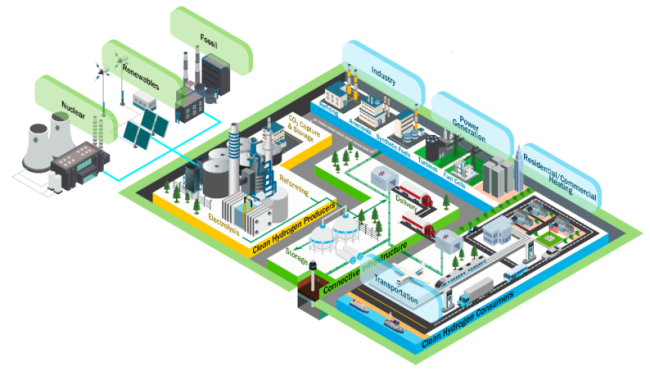
Figure 1. Potential Hydrogen Hub Components. Source: DOE
Figure 1 illustrates the components of a prospective hydrogen hub, beginning with the various sources of energy that might be used to power hydrogen production (nuclear, renewables or fossil fuels — green markers to upper-left); the clean hydrogen producers (nuclear- or renewables-powered electrolysis or steam-methane or auto-thermal reforming of natural gas with carbon capture and sequestration, or CCS — yellow-bordered area); connective infrastructure (pipelines, storage and other delivery support — green-bordered area at center); and clean hydrogen customers (industry, power generation, residential/commercial heating, and transportation — blue-bordered area).
As for the criteria DOE will use in its review of the concept papers and full proposals, the department lists these:
- Feedstock diversity. At least one hub will use renewable power (and electrolysis) to make hydrogen, another will use nuclear power (and electrolysis), and yet another will use natural gas, SMRs or ATRs, and CCS.
- End-use diversity. At least one hub will use the clean hydrogen produced there in the electric power sector, the industrial sector, the residential/commercial heating sector, and the transportation sector.
- Geographic diversity. The selected hubs will be in different regions of the U.S. and will use energy sources abundant there.
- Hubs in natural gas production areas. At least two hubs will be in parts of the U.S. with the greatest natural gas resources.
- Employment. The DOE will give extra weight to proposals likely to create the most opportunities for skilled training and long-term employment.
In essence, the DOE is seeking to take full advantage of the unique characteristics of different parts of the U.S. regarding energy availability and potential end-users of clean hydrogen. The department also has stated that the proposed hubs will be expected to balance hydrogen supply and demand, include connective infrastructure, and plans for long-term financial viability. Further, the DOE said it will favor proposals that were developed with substantial engagement from local and regional stakeholders and Native American tribes and that will provide significant benefits to disadvantaged communities.
The hydrogen-hub proposals discussed in the new Drill Down Report have diversity in spades — in location, size, complexity and many other characteristics. The standout among them may be the HyVelocity Hub proposal for a hydrogen network along the Gulf Coast in Texas and Louisiana, a region that already has an impressive array of hydrogen production, pipeline and storage assets — not to mention natural gas supply, wind farms, solar facilities, carbon-sequestration potential, and scores of hydrogen end-users. The founding proponents of the HyVelocity Hub, which we discuss in detail in the report, include the Center for Houston’s Future, GTI Energy, Chevron, Air Liquide and the University of Texas at Austin.
Among the other hydrogen-hub proponents with seemingly strong cases to make for DOE support are those in the Corpus Christi/Ingleside area in South Texas, California, the Louisiana-Arkansas-Oklahoma region, the Marcellus/Utica Shale, the Midwest/Great Plains, the Rockies, and the Pacific Northwest. None of these offer the same degree of existing hydrogen infrastructure as the Texas-Louisiana coast, but each has one or more important selling points, such as extraordinary solar potential and a huge base of existing or prospective hydrogen end-users (California); extensive nuclear or hydroelectric generating capacity (the Midwest and the Pacific Northwest, respectively); and carbon-sequestration potential (the Marcellus/Utica, the Great Plains and the Rockies).
Consider, for example, the Western Interstate Hydrogen Hub (WIH2) proposal developed by four Rocky Mountain states: Wyoming, Utah, Colorado and New Mexico. Unlike most others submitting concept papers to the DOE a few weeks ago, WIH2 provided a summary that describes the proposal in somewhat specific terms, leaving out only a few details that for now remain confidential.
Here’s the gist of what WIH2 is about. First of all, partners include the four states mentioned above and several private-sector entities, including utilities (Xcel Colorado, New Mexico Gas); midstream companies and energy-infrastructure developers (Tallgrass Energy, Avangrid, Dominion Energy Utah); a hydrogen developer (Libertad Power); and a large, Native-American-owned agricultural entity (Navajo Agricultural Production Industries) — plus Atkins, an engineering and consulting firm (and unit of SNC Lavalin Group) active in hydrogen development projects around the world.
Under WIH2’s proposal:
- Clean hydrogen would be produced at a total of eight major production centers, some via renewables-powered electrolysis and some with natural gas and SMRs or ATRs with CCS. WIH2 anticipates that the centers will have a combined capacity of 1,000 metric tons per day (MT/d) by Year 7 of the hub’s development, rising to 1,900 MT/d by Year 12.
- The produced hydrogen would be transported either as part of mixed gas (natural gas plus hydrogen) in existing pipelines, as 100% hydrogen through new pipelines, or in cryogenic form by truck to more remote end-user sites.
- The hydrogen would be stored underground in “favorable geologic storage,” as line pack in hydrogen pipelines, or in cryogenic form.
- The hydrogen would be used in “a wide variety of ways, including power generation; load-leveling of the region’s increasing use of renewable energy; and for transportation and industrial applications, including refineries, ammonia production, steel production, cement production, brewing, and mining.”
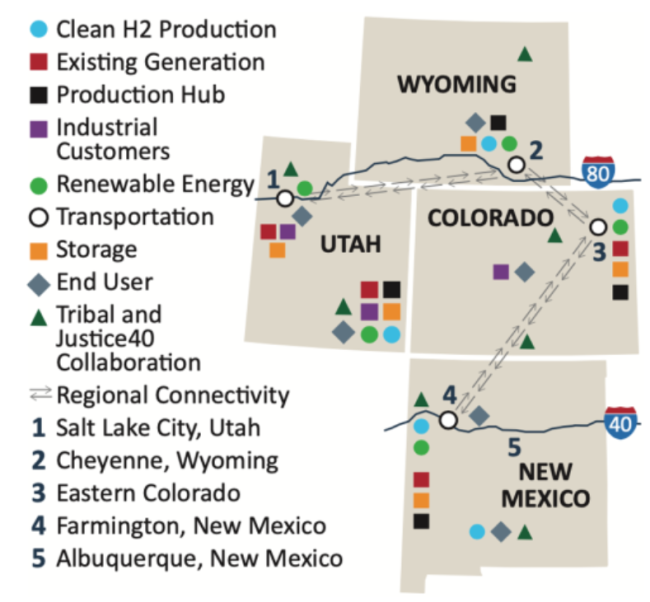
Figure 2. Western Interstate Hydrogen Hub. Source: WIH2
WIH2 also said it will undertake demonstration projects on the potential for using blends of natural gas and hydrogen for residential/commercial heating. Figure 2 shows the four primary production/transportation hubs (white circles numbered 1 through 4), pipeline connectivity (gray arrows), hydrogen storage areas (orange squares), and existing power-generation facilities where hydrogen would be used as a fuel (red squares).
WIH2 and other proposals to the DOE seem extraordinarily ambitious in their scope, considering the fact that the clean hydrogen industry is still in its infancy. In many ways, the federal government’s aggressive efforts to create the industry from scratch remind us of the push since the 1990s to jump-start the build-out of wind and solar power with generous tax credits and other means of support. Today, wind farms and solar facilities are considered to be important elements of the U.S. power-generation sector as well as key parts of the government’s effort to achieve climate-related goals.
Still, there are major challenges associated with making clean hydrogen part of the mainstream. Producing hydrogen while generating little or no greenhouse gas (GHG) emissions requires massive amounts of new renewable generating capacity — mostly wind and solar — as well as CCS-related assets (CO2 pipelines, sequestration sites etc.). The development of a clean hydrogen industry also will require new hydrogen pipelines and other infrastructure. And that’s what the DOE’s $8 billion hydrogen-hub program is all about, namely supporting the build-out of concentrated, coordinated networks of clean hydrogen production, transportation, storage and end-users.
While it would be impossible to predict which plans will ultimately win the DOE’s support, we fully expect the department to follow its guidelines regarding geographic diversity and the rest. That should result in an interesting mix of winners and, possibly, the beginnings of what may in the 2030s and ’40s evolve into inter-regional hubs and maybe even a national hydrogen network. For more about our new Drill Down Report on clean hydrogen hub proposals, click here.
